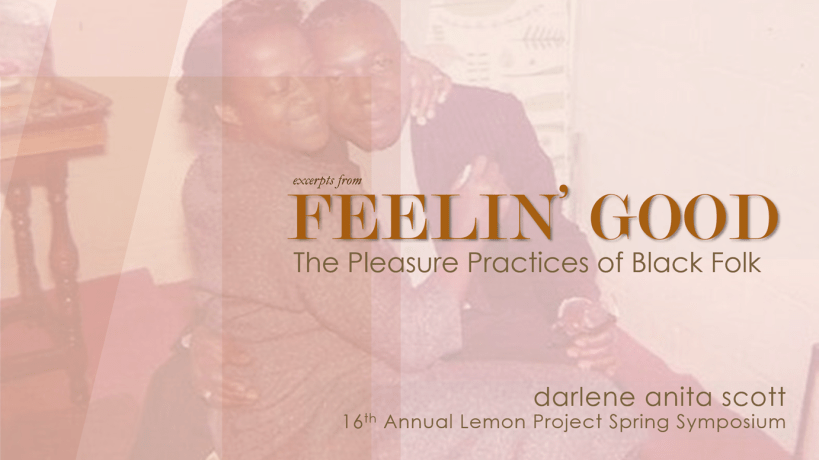
The American project necessarily dehumanizes Black people by reducing them to capital and capital-producers. This paper examines their pleasure practices including their romantic and familial relationships, their foodways, and children’s play as assertions of humanity and subversions of the identities constructed for them. DuBois says Black folks have a “double consciousness”—how they perceive themselves and how Whiteness constructs and interprets them. DuBois attends to the difficulties of progress; specifically the challenge of asserting selfhood under “the problem of the color line;” that is, the weight of Jim Crow. Yet even he admits “the rough world was softened by laughter and song”—pleasure practices. Riffing off of his interpretation of Black life in the The Souls of Black Folk this paper contends that pleasure practices necessarily mirror the “double consciousness” with liberatory affect. And that this softening is where progress and liberation happen.

 darlene anita scott